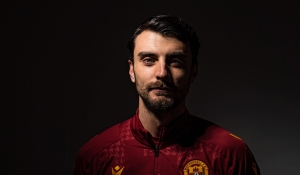
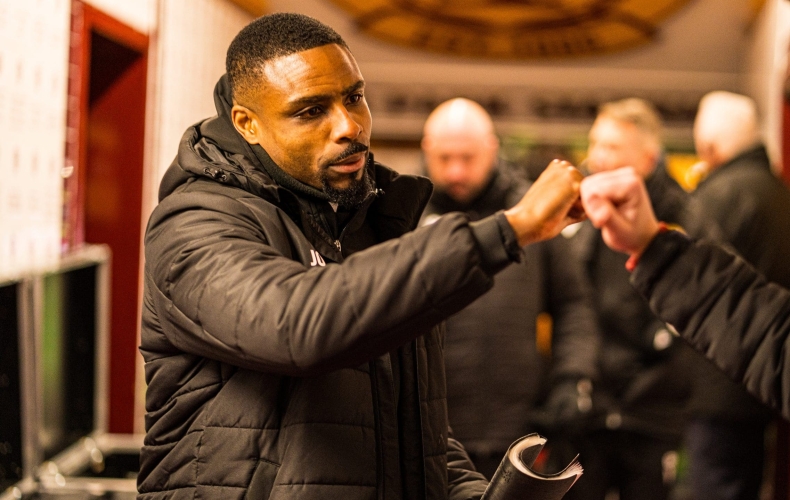
Jon Obika’s coaching career may be in its early years, but the journey so far has been littered with learning.
Retiring from his playing career in the summer of 2024, Obika wasted no time in diving head-first into the next stage of his life. Joining the coaching staff under then-Motherwell manager Stuart Kettlewell, Obika began to learn on the job.
That first season as a coach would show Obika first-hand the pressures and changes football as an industry can bring. Kettlewell would depart in January 2025, and his replacement, the unknown Michael Wimmer, would arrive the following month.
But the German would depart just months later, leaving Obika a tad concerned for what would come next.
“There was concern in the summer, no doubt about it,” Jon Obika said.
“Michael Wimmer and Ahmet [Koc] were only here for a few months, and I just didn’t see them leaving coming. So, when the club was on the hunt for a new manager, you’re just not sure what type of manager will be coming in.
“Obviously, I’ve worked and played under so many different managers, and they all have different characters and different demands. But when the gaffer came in, he just didn’t even need time. He hit the ground running, and because he’s such a tactician and a man-manager, I’m learning something every day.
“When we found out he was going to be the new manager, the first thing I did was research. I wanted to find out what type of shape he likes, players he’s worked with and where he’s been. It allows me to find out if there are players I know that he’s maybe encountered, and I can get a feel for what he’s like.
“The gaffer called me as soon as he was announced as manager. I think he phoned every member of staff, and you could see really early on the sort of touch he had and the type of person he is. It wasn’t because he had to do that, but it was because he wanted to. It just settled everyone.
“And you can see the difference those little things have made. For example, the fact that Max Rogers and the manager hadn’t worked together prior to Motherwell, or even known of each other, for them to have built up such a smooth operation and made it such a healthy environment to work in is hugely impressive.”
From that first phone call, it wasn’t long until the new manager was in the building and starting to get to work on the season ahead.
Early on, Obika was impressed. Having coached at some big clubs like FC København, IFK Göteborg and Sparta Prague prior to his arrival in North Lanarkshire, the Motherwell first-team coach could tell that he had operated at the highest level.
“I’d even say the body language of players going into games has been impressive,” Obika explained.
“And that’s because they believe in the system that he has implemented here. It’s not an easy thing to do, especially when players aren’t used to this approach. But he’s so clear in his speech, and he makes it clear for the players. He’s made something that may seem difficult look very easy.
“I think that’s his strength. He’s so adaptable. For every opposition we come up against, there’s a different plan, and it can be our same style but just with small tweaks. There are things I’d have never thought of in my mind going into a game, so anytime he says something in a meeting or a conversation, I’m trying my best to write it down because I feel it could be something I could learn from.
“Some of the things I’m not even sure I could learn in a course or anything. So, I feel very privileged to work with him.”
Many players in the current have spoken openly about their shock and doubt when they first saw the plan for the system. The bravery and risk involved took some aback.
And it turns out, it wasn’t just the players who felt this way.
“When I think about when I was a player, the last time I played free-flowing football with dominant possession was Spurs,” Obika added.
“But even then, you had Arsenal and Man United, who were dominant too. It can be hard to implement that approach, and for a large part of my career, I wasn’t playing the way I wanted to play.
“The bravery the manager brings to his staff and to the players is impressive. We’re going into every game believing this is our style; we won’t alter it, and we’re going to put our stamp on the game.
“At the start, your mind is still in the Scottish football mindset. It was very difficult to see how it would work. But when you start to work with him, these things are ironed out very quickly, and there’s no panic from there.
“He holds himself so well around the place; there’s no fear, and that rubs off on everyone.”
Now working under his third manager at Motherwell, Obika has had to learn, adapt and implement various coaching philosophies, with every manager having their own preference on how they want things to operate.
But all these hurdles have been navigated so far, and the former Tottenham man is loving life in the dugout.
“I feel, as a player, I adapted to different environments,” he stated.
“I certainly wasn’t set in one way, and that probably comes from going out on loan so many times. You understand different characters and different people. It’s a people’s game, so the changes here have felt quite smooth for me.
“As a coach now, the demands of the different tactics change. If the manager wants something, it’s about how I bring this out of a player and ensure they follow the instruction.
“Sometimes it’s the language used. Even if I’m speaking in front of the players, it’s important I still have my own sort of stamp on things, but the language must be the same as that of the manager. And that language changes depending on who is in charge.
“And that’s the learning curve, and I’ll continue to improve on that going forward. There are so many years still to go for me in my coaching career. I feel there’s never going to be a time where you’ve grasped everything. I’m always going to be a student in that sense even when I’m 20 years down the line.
“I see the manager as an elite manager so you learn fast, and that’s helped me so much this season.”
He might be in the infancy of his coaching career, but Obika’s mind has often wandered about the future now he’s hung up the boots.
It’s only natural for him to think about what the future may hold, but that mindset is something foreign to him.
“I do think about what’s still to come, which is so strange because as a player I didn’t think about the long-term future at all,” he laughed.
“All I was thinking about was the next game when I was playing, and then when you finish and you’re now in the building around people, you just know this is what you want to be doing in the future.
“But I need to keep working under managers who inspire and motivate me. I want to be able to implement my own game also. I have loved football since I was a very young boy. But I also enjoy working with people and making them feel their best.
“I love going into the schools and speaking to the students about my journey and getting to know them. I feel like it’s something important that I should be doing.
“It’s always something I’ve wanted to do, and it’s where my career has gone to now, and working with a first-team environment, I never wanted to leave the youngsters behind. Even the young players in our squad – there are so many things to learn in that age group or younger.
“So, if they’re aspiring footballers or athletes, it’s important for them to understand the importance of their own character. That’s something that’s vital, and the earlier they understand that, the better. I always wanted to give something back to those in our community.”
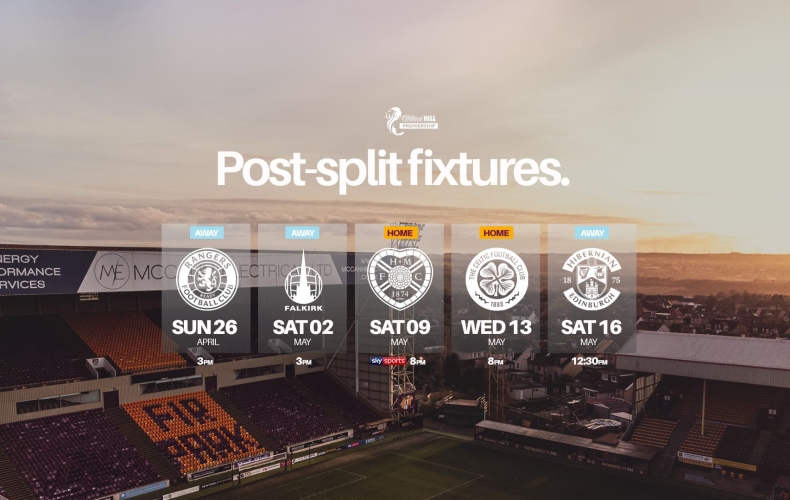
As we enter April, the end of the season begins to creep ever closer, and the coaching staff at the club need to ensure that all the players are on board for the final push to the finish line.
With so much at stake, messaging from the staff could play a crucial role in the hunt for European football.
“The message has been to be who we are, and that’s been consistent all season long,” the 35-year-old explained.
“It gives the players that sort of belief that we can continue rising up that table. There’s no fear about any team, but that messaging is so the players can focus on themselves.
“I’ve been in teams as a player where you start focusing on everything around you, and the performance levels can dip. The Gaffer talks about Motherwell and our circle. He says we focus simply on building on ourselves.
“As a player, it’s always about the next game. That approach has served us so well to this point, so I don’t see why we would alter that now. That’s always the focus from now until the end of the season.”